
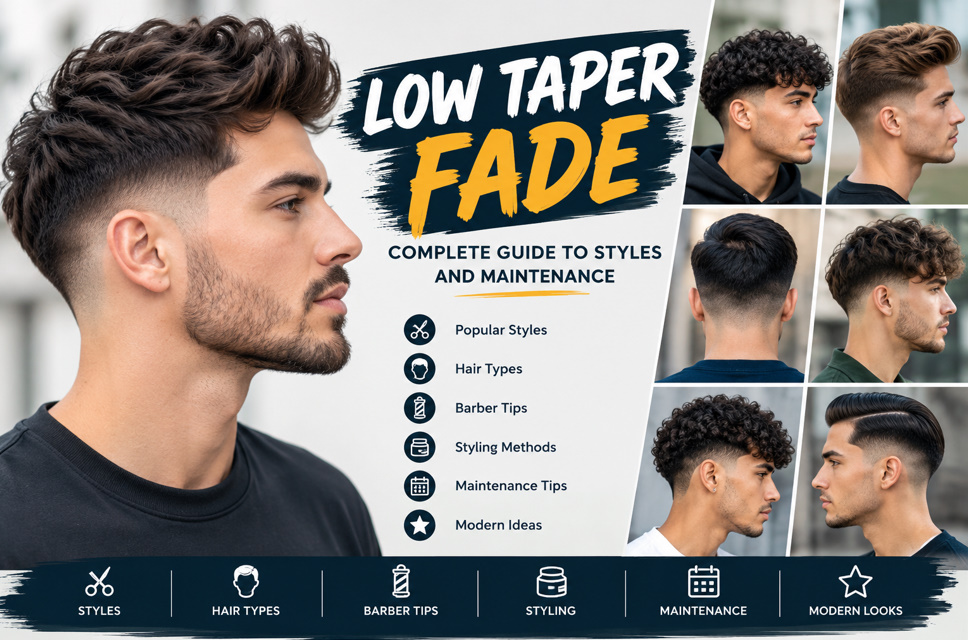
What Is a Low Taper Fade?
A low taper fade is a haircut where the hair gradually becomes shorter around the sideburns, ears, and neckline. The transition stays low instead of climbing toward the temples. This creates a subtle, clean appearance while keeping more length through the sides and top.
The style is defined by its gradual blending rather than a sudden change in length. Because the taper remains concentrated around the lower edges, it can be combined with many top hairstyles. Straight, wavy, curly, and coily hair can all be paired with this versatile haircut.
- Low fade placement
- Gradual blending
- Clean sideburns
- Tapered neckline
- Fuller side panels
- Flexible top length
- Smooth transition
- Modern haircut
Low Taper Fade vs. Low Fade
A low taper fade and a low fade are closely related, but they can create different silhouettes. A low taper typically focuses on the sideburns and neckline, leaving most of the side panel fuller. A low fade usually creates a more continuous short section around the lower sides and back.
When talking with a barber, this distinction can make your request clearer. If you want subtle edges with plenty of side length, describe a low taper. If you prefer more visible fading across the lower sides, explain that preference. A reference image can also help communicate the exact shape you want.
- Low taper stays compact
- Low fade covers more area
- Taper preserves side weight
- Fade creates more contrast
- Both use low placement
- Top remains customizable
- Terminology can vary
- Photos improve communication
Popular Low Taper Fade Styles
A low taper fade can serve as the foundation for many hairstyles. Popular combinations include textured crops, curls, waves, fringes, side parts, messy tops, and longer brushed styles. The low placement keeps the sides relatively natural while giving the haircut a clean perimeter around the ears and neckline.
The top determines much of the haircut’s personality. A textured finish can create a casual appearance, while a side part provides a more organized look. Curly and wavy hair can retain natural movement, and longer hair offers additional styling options without changing the basic low taper structure.
- Textured low taper
- Curly low taper
- Wavy low taper
- Low taper crop
- Side-part taper
- Fringe taper
- Messy taper
- Long-top taper
Low Taper Fade for Different Hair Types
The low taper fade works across numerous hair textures because the taper mainly changes the lower edges. Straight hair can create a smooth silhouette, while wavy hair adds natural movement. Curly and coily hair can maintain their texture and volume on top while the sideburns and neckline receive a controlled, polished finish.
Hair thickness and density should also influence the haircut. Thick hair may require more weight management, while finer hair can benefit from preserving additional length. Your barber can adapt the blend according to your natural growth pattern, texture, density, and preferred styling routine.
- Straight hair
- Wavy hair
- Curly hair
- Coily hair
- Thick hair
- Fine hair
- Dense hair
- Textured hair
Low Taper Fade for Different Face Shapes
A low taper fade can be adapted to different face shapes because it does not remove large amounts of hair from the upper sides. Keeping additional side length allows the haircut to retain a natural silhouette. The top can then be adjusted to create the overall shape you prefer.
Your hairstyle on top can change the visual proportions of the finished cut. Texture, length, and volume can all be customized. Instead of following rigid rules about face shape, consider your hair’s natural direction, density, desired top length, and the appearance you want from the front and side.
- Oval face shape
- Round face shape
- Square face shape
- Long face shape
- Heart face shape
- Adjustable top
- Natural proportions
- Custom silhouette
How to Ask a Barber for a Low Taper Fade
When requesting a low taper fade, clearly explain where you want the taper. You can ask for a low taper around the sideburns and neckline while keeping the sides above the ears relatively full. Then describe your preferred top length and whether you want curls, waves, texture, fringe, or a clean finish.
It is also useful to discuss the shortest point of the taper. You may prefer a subtle guarded finish or a closer edge. Because haircut terminology can differ between barbers, a reference photograph is often helpful. Explain which parts of the image you like so the barber understands your preferred shape and level of contrast.
- Request a low taper
- Mention sideburns
- Specify the neckline
- Discuss side length
- Explain top length
- Choose shortest length
- Describe desired finish
- Bring a reference image
Low Taper Fade Maintenance and Styling
A low taper fade gradually becomes softer as hair grows. Maintenance depends on individual growth and how defined you want the haircut to remain. Some people refresh the taper every few weeks, while others allow it to grow longer for a more relaxed appearance.
Styling mainly involves the longer hair on top. Depending on your texture, you can use your fingers, a comb, brush, or appropriate styling product to create the desired direction and finish. The tapered sections generally require little daily styling because their shape comes from the haircut itself.
- Maintain the neckline
- Refresh sideburns
- Schedule regular trims
- Style the top
- Use suitable products
- Preserve natural texture
- Avoid excessive product
- Keep edges neat
Low Taper Fade Ideas for a Modern Look
Modern low taper fade hairstyles often combine a clean perimeter with natural-looking texture. A textured crop can create a casual finish, while curls and waves emphasize natural movement. A fringe, side part, or brushed-back top can provide a more structured appearance without changing the low placement of the taper.
The haircut is also flexible enough for different everyday settings. You can keep the top short for simple grooming or preserve additional length for multiple hairstyles. Since the taper remains low, the finished look can feel contemporary while retaining more natural fullness across the sides.
- Textured crop
- Natural curls
- Loose waves
- Side fringe
- Side part
- Brushed-back top
- Messy texture
- Defined neckline
Things to Consider Before Getting a Low Taper Fade
Before getting a low taper fade, decide how much contrast you want between the top and sides. A softer taper preserves more side weight, while a shorter finish makes the transition more noticeable. Think about your natural hair texture and how much time you want to spend styling your hair each day.
Maintenance is another important factor. If you prefer a simple routine, choose a top style that works naturally with your hair. If you enjoy changing your hairstyle, retaining more length gives you additional options. Discussing these preferences with your barber can help create a haircut suited to your everyday routine.
- Choose taper height
- Decide shortest length
- Consider side volume
- Check hair texture
- Select top length
- Consider maintenance
- Discuss neckline shape
- Share hairstyle inspiration